Archives
- 2026-07
- 2026-06
- 2026-05
- 2026-04
- 2026-03
- 2026-02
- 2026-01
- 2025-12
- 2025-11
- 2025-10
- 2025-09
- 2025-03
- 2025-02
- 2025-01
- 2024-12
- 2024-11
- 2024-10
- 2024-09
- 2024-08
- 2024-07
- 2024-06
- 2024-05
- 2024-04
- 2024-03
- 2024-02
- 2024-01
- 2023-12
- 2023-11
- 2023-10
- 2023-09
- 2023-08
- 2023-06
- 2023-05
- 2023-04
- 2023-03
- 2023-02
- 2023-01
- 2022-12
- 2022-11
- 2022-10
- 2022-09
- 2022-08
- 2022-07
- 2022-06
- 2022-05
- 2022-04
- 2022-03
- 2022-02
- 2022-01
- 2021-12
- 2021-11
- 2021-10
- 2021-09
- 2021-08
- 2021-07
- 2021-06
- 2021-05
- 2021-04
- 2021-03
- 2021-02
- 2021-01
- 2020-12
- 2020-11
- 2020-10
- 2020-09
- 2020-08
- 2020-07
- 2020-06
- 2020-05
- 2020-04
- 2020-03
- 2020-02
- 2020-01
- 2019-12
- 2019-11
- 2019-10
- 2019-09
- 2019-08
- 2019-07
- 2019-06
- 2019-05
- 2019-04
- 2018-11
- 2018-10
- 2018-07
-
S63845: Transformative MCL1 Inhibition for Advanced Apopt...
2025-09-25
Discover how S63845, a potent small molecule MCL1 inhibitor, is revolutionizing mitochondrial apoptotic pathway studies and hematological cancer research. This article delivers unique insights into combinatorial targeting strategies, mechanistic depth, and translational research value.
-
Gastrin I (human) in Translational GI Research: Bridging ...
2025-09-24
Explore how Gastrin I (human), a key gastric acid secretion regulator, is revolutionizing gastrointestinal physiology studies by enabling advanced organoid modeling and translational pharmacokinetic research. Discover unique insights into its mechanism and novel applications in drug discovery.
-
BGJ398 (NVP-BGJ398): A Selective FGFR Inhibitor for Mecha...
2025-09-23
Explore the mechanistic applications of BGJ398 (NVP-BGJ398), a potent and selective FGFR inhibitor, in cancer research. This article examines its molecular selectivity, apoptosis induction in cancer cells, and unique research value in unraveling FGFR signaling pathways.
-
N1-Methyl-Pseudouridine-5'-Triphosphate: Mechanistic Insi...
2025-09-22
Explore how N1-Methyl-Pseudouridine-5'-Triphosphate advances RNA synthesis and translation fidelity, offering critical benefits for mRNA vaccine development and RNA stability enhancement. This review provides mechanistic analyses and practical considerations for its use in research.
-
PD 0332991 (Palbociclib) HCl: Mechanistic Advances in CDK...
2025-09-19
Explore the latest mechanistic insights into PD 0332991 (Palbociclib) HCl as a selective CDK4/6 inhibitor, focusing on its ability to induce cell cycle G1 phase arrest and novel apoptotic signaling pathways relevant to breast cancer and multiple myeloma research.
-
Fluorescent RNA Probe Synthesis with HyperScribe™ T7 Cy3 Kit
2025-09-18
Explore the advanced methodology of fluorescent RNA probe synthesis using the HyperScribe T7 High Yield Cy3 RNA Labeling Kit for high-sensitivity in vitro transcription RNA labeling, enabling robust applications in gene expression analysis and hybridization assays.
-
ALK fusion positive NSCLC is clinically actionable because
2025-03-03
ALK fusion-positive NSCLC is clinically actionable because it can be targeted by several FDA-approved drugs, including the first generation TKI crizotinib, which is a dual inhibitor to MET and ALK [15], and the second generation inhibitors, alectinib and ceritinib, both of which are highly-selective
-
In addition to it we also showed that glycine increases
2025-03-03
In addition to it, we also showed that glycine increases miR-301a expression which directly binds to PTEN 3′UTR target sites [13]. Glycine confers neuroprotection through microRNA-301a/PTEN signaling in rats cortical neurons in oxygen deprivation model [13]. Substantial studies indicate that inhibit
-
Implicit in this concept is the
2025-03-03
Implicit in this concept is the idea that the β-adrenoceptors in the detrusor would be activated by adrenergic nerves of the sympathetic system: sympathetic activity promoting relaxation and enhancing bladder capacity. However, it has been demonstrated that there is only a sparse adrenergic innervat
-
br Experimental procedures br Results br Discussion br Ackno
2025-03-03
Experimental procedures Results Discussion Acknowledgments Introduction β-Adrenergic receptors (β-ARs) belong to the superfamily of membrane proteins termed G protein-coupled receptors. β-ARs are distributed in the effector Gallein structure of most of the sympathetic nerve fibers, a
-
Besides its multiple peripheral effects adiponectin may amel
2025-03-03
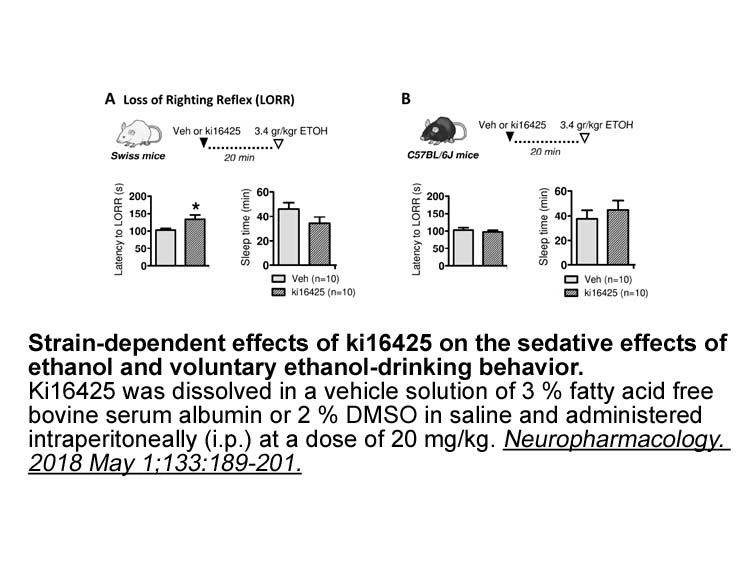
Besides its multiple peripheral effects adiponectin may ameliorate insulin resistance by acting in the brain, and intracerebroventricular administration of adiponectin in rodents decreases body weight by stimulating energy expenditure [13]. Adiponectin most likely crosses the blood-CSF-barrier (BCB)
-
We further analyzed selected hit compounds for their ability
2025-03-03
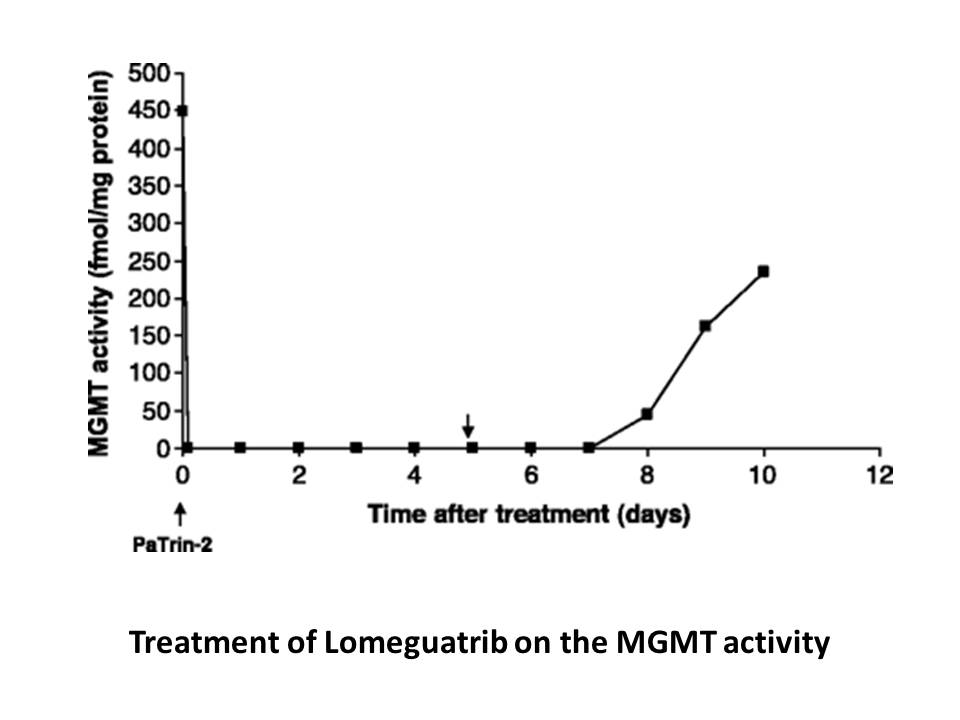
We further analyzed selected hit compounds for their ability to inhibit human AdK in intact cells. Human 1321N1 astrocytoma adrenergic antagonist were utilized which were found to express AdK. The whole cell assay was performed using a 96-well format. The standard AdK inhibitor 5-iodotubercidin was
-
br Introduction Adenosine deaminase ADA which can catalyze
2025-03-03
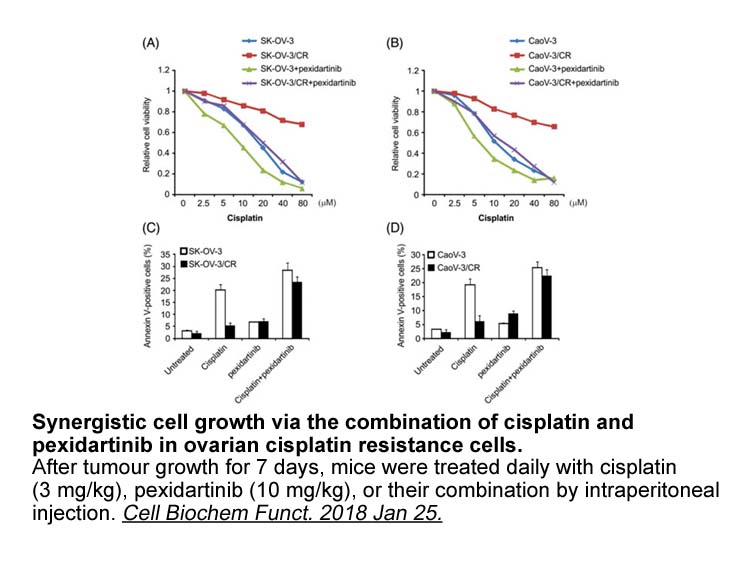
Introduction Adenosine deaminase (ADA), which can catalyze the conversion of AD to inosine by removing an amino group, is a key hydrolytic enzyme of purine metabolism (Conway and Cooke, 1939), and plays an important role in an amount of diseases. For example, an increase of ADA activity in serum
-
Macrophage polarization is linked to activation of the ligan
2025-03-03
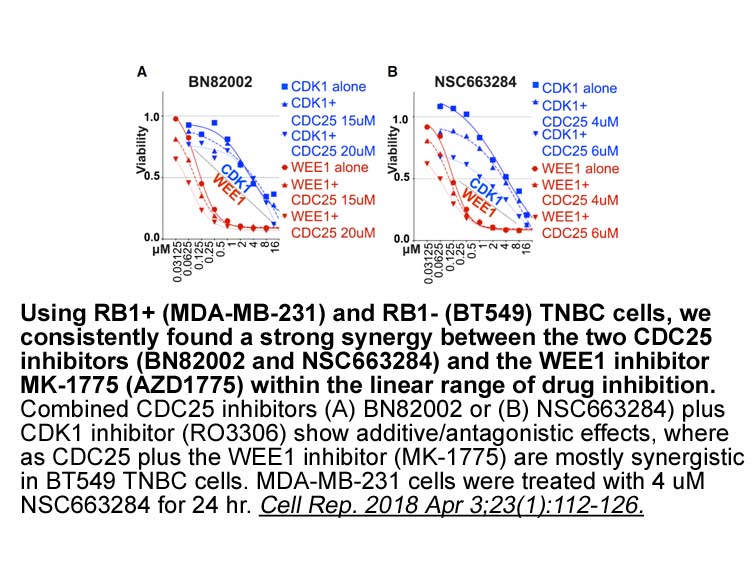
Macrophage polarization is linked to activation of the ligand-dependent transcription factor PPARγ. Recently, Odegaard et al. demonstrated with a macrophage-specific deletion of PPARγ in mice that alternative macrophage activation is impaired [14]. We provided evidence that contact to apoptotic dfmo
-
In the final set of experiments the dependence
2025-03-03
In the final set of experiments, the dependence of the reaction rate on viscosity was determined. The experimental protocol previously used to study the reaction of LOX with AA was used., Reactions of 5-LOX and AA were carried out at different relative viscosities in Tris buffer (25mM, pH 8.0) at 2
15806 records 28/1054 page Previous Next First page 上5页 2627282930 下5页 Last page